
Renovate/Restore/Revitalize Downtown


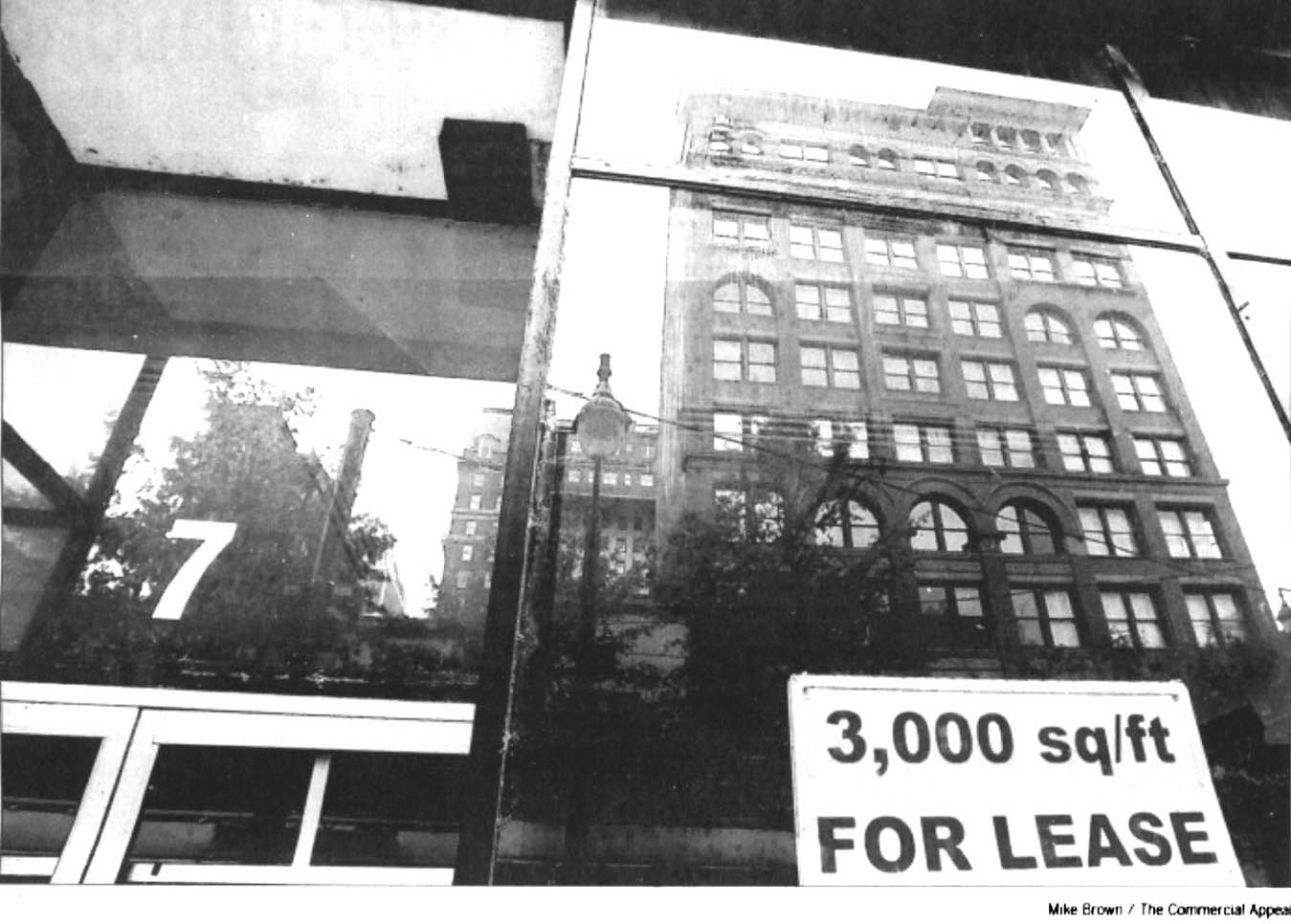
Commercial Appeal photographer Mike Brown points out the need to renovate/restore/revitalize our historic downtown “before we move on to the next bigger and better thing.”
Brown does not refer to the RDC plan, which would take public land for private development and build a whole new downtown along the riverfront, but the issue is the same -- smart growth? As Jack Belz said to the City Council in 2004, we already have enough unused space downtown to meet the demand for the next 50 years. Click here to take a look at the economics.

Here are Mr. Brown’s comments, which ran with his photograph in the Sunday Commercial Appeal's weekly pictorial "1,000 Words" Oct. 14, 2007.


Ready and Waiting
As developers prepare to break ground on the $175 million, 3-story mixed use project named One Beale, they might want to consider taking a casual walk down Main Street through Mid-America Mall.
They will find that in the short distance between Peabody Place and Adams, 47 percent of the storefronts sit vacant, many in desperate need of repair and updating. Elsewhere in Downtown, historic high-rise buildings sit empty. Recently built high-dollar condos on the South Bluff have “For Sale” signs in the windows. After just six years, major tenants of the Peabody Place entertainment and retail center have scaled back or closed their doors.
Then look toward South Main, where the redevelopment of historic buildings attracts large weekend crowds, or at the Lincoln American Tower, which is being restored to its previous grandeur and has much of its space already reserved.
It’s clear that growth and development Downtown are essential to the health of our fine city’s image and economy, but is it all smart growth? Should we find ways to utilize the unused spaces that already exist before we move on to the next bigger and better thing?

[Click here to read more...]

Thank you, Commissioner Mulroy!


Thanks to the leadership of Commissioner Steve Mulroy, County money will not support

* funding for Beale Street Landing,

* legal action on the Public Promenade, or

* contracting with private developers to implement the existing RDC Promenade Plan.

The County Commission voted on Oct. 22 to remove their funding support from this and eight other sections of the economic development plan MEMPHISED. The contract is being re-drafted to reflect this decision and will be voted on at the next County Commission meeting, Nov. 5 at 1:30 p.m. at the County Building (160 N. Main.)

To read more about this issue, click here.

To access the entire economic development plan, click here.

[Click here to read more...]

New York Times takes a look at 4 public spaces with Fred Kent

Fred Kent, the founder and president of the Project for Public Spaces, recently took a look at four New York spaces with Elizabeth Giddens of The New York Times. Mr. Kent gave her his ideas on why some work and some don't. For those of you who were able to attend the “placemaking” workshop Mr. Kent led on the Memphis riverfront in March, it’s a reminder of several of the basic principles we learned. And for all of us, it’s a quick summary of a few essential elements that help make great public places.

Washington Square Park
A NOD “Almost perfect,” Fred Kent says about the park, where visitors to its main fountain are both audience and spectacle.

The scene around the central fountain of Washington Square Park was so enthralling on an August day that the people with books on their laps weren’t even bothering to read them. The magic lay not in street performers but in the scores of people draped around the fountain’s stepped bowl. They served as both audience and spectacle, participating in a quintessential urban pleasure, people-watching.

“I’ve been coming to this park nearly every week for 10 years, and I’ve never gotten tired of it,” Mr. Kent said. “It’s almost perfect.”

But not quite.

“Watch,” he whispered, his crescent-shaped eyes crinkling with delight. “People will tell you exactly how to improve a place, just by their actions.”

Mr. Kent immediately noticed that several people had squeezed themselves into a narrow no man’s land, sandwiched between the backs of the benches and the plants that ring the dog park.

“Clearly, people want to look at the dogs,” Mr. Kent said. “So why not arrange the benches and move the hedges in a way that allows them to do that?”

He next remarked on the huge crowd around the cart that was selling dosas, a South Indian crepe, at the park’s southwest border. The crowd is there because the dosa man makes delicious and inexpensive dosas, but also because people especially like to eat in parks. But to Mr. Kent’s consternation, in most New York parks, including this one, the options for buying food are few or none.

“I would put in two or three clusters of ethnic food carts, surrounded by some tables and chairs,” Mr. Kent said. “Or even a little cafe-restaurant in the red brick buildings that the Parks Department uses for storage.”

Food kiosks, to Mr. Kent’s mind, are among the most appealing destinations a place can feature — accessible fountains are another — and appealing destinations are the backbone of his prescriptions for public spaces. The logic is simple: Destinations attract people, and, as Whyte put it, “what attracts people most, it would appear, is other people.”

That would explain the crowds clustered around the fountain, even when it’s dry.

What Mr. Kent would not do is move the fountain so that it is in line with the arch, an arrangement that is planned as part of the park’s coming $16 million renovation and will mostly please symmetry-obsessed aerial photographers.

Nor would he replace the U-shaped ledges that protrude into the central circle around the fountain, something the plans also call for. He would keep them because people obviously like them. The ledges are invariably covered with sitters because their design, quite by accident, allows for flexible and varied social arrangements. One of the nine ledges was just then comfortably accommodating two people playing guitars, a couple engaged in an animated discussion, and a solitary sunbather.


Brooklyn Borough Hall
A NO To perk up these deserted parks, Mr. Kent prescribes food carts, art stalls and crafts tables.

Planners have long been keen to use parks to keep the city at bay, to provide a retreat from urban bustle. This perspective has led to some undeniably great places, such as Central Park and Prospect Park, but to Mr. Kent’s mind, it has also limited an understanding of the potential of public spaces.

Case in point: the parks north of Brooklyn Borough Hall. These parks, which stretch from the front of Borough Hall almost all the way to the Brooklyn Bridge and the East River, constitute a nearly continuous greenbelt, a 150-yard-wide, half-mile-long swath of trees, grass and benches — in theory, a perfect oasis from the hubbub of downtown Brooklyn.

The trouble is, the space is generally deserted. On a cloudless late-summer day, the only people using the parks were the half-dozen homeless men sprawled across its benches.

According to Mr. Kent, this is because, with few exceptions, the passive enjoyment of trees is generally not enough to attract a broad range of users.

That leads to one of his favorite axioms: “What people say they do and what they actually do are often two totally different things.” What they say they do is seek refuge from the city in quiet places where they can “get away from it all.” What they actually do is seek out the lively places, full of people and activities, “not to escape the city,” as Whyte observed, “but to partake of it.”

When Mr. Kent looks at the scraggly, unused string of parks, he sees the opportunity for something like the Ramblas in Barcelona — a long, bustling market dotted with produce stands, ethnic food carts, booksellers and craft tables, and interspersed with and surrounded by green spaces.

“You could draw on the borough’s strengths and have art stalls run by local galleries and the Brooklyn Museum,” Mr. Kent said, gesturing at his imaginary agora, “and plant and flower stands run by local nurseries and the Brooklyn Botanic Garden.”

The market could tumble north, punctuated with foosball tables, swing sets, gardens and performance spaces, and connect, via a small sky bridge, to the Brooklyn Bridge walkway, so that bikers and pedestrians from Manhattan would be pulled into a lively, interesting space that displayed Brooklyn in all its glory. Such a space could run along Old Fulton Street right down to the water, leading thousands of happy promenaders to the middle of the planned Brooklyn Bridge Park.

“This could be the best approach to the waterfront in the United States,” Mr. Kent said. “Brooklyn could be defined by this space.”

And the price tag? Mr. Kent put it at less than $2 million — petty cash in development terms — and rents from the markets could ensure that the project would pay for itself in a few years.

“Sometimes the very fact that it wouldn’t cost a lot prevents it from being done,” he said with a sigh. “No one’s pushing for it because no one stands to get rich.”


Bleecker Street
BORDER WAR Mr. Kent would ban cars on Bleecker and give pedestrians, like this one, free rein.
When Mr. Kent pulled his bike over to look at the western entrance to Bleecker Street, he was nearly hit by a cab tearing around the bend. Two lines of Hudson Street traffic funnel around a curve into Bleecker’s one lane, and the choke point is next to a park and a playground.

“That’s no way to enter a neighborhood,” Mr. Kent said, shaking his head.

Public space, he added, is more than parks and plazas: “It’s the entire ground floor of a city — everything that’s not office or residence.”

In Mr. Kent’s opinion, streets and sidewalks should therefore be designed for the public good. Instead, he complained, they are designed primarily for high-volume, high-speed traffic.

If Mr. Kent had his druthers, Bleecker Street would have no cars at all, parked or otherwise, and cafes and shops would spill out onto the sidewalks. This may not be a farfetched idea. One of the planks in the mayor’s 25-year growth and environmental plan, unveiled in April, calls for a “pedestrian street” in each of New York’s 59 community districts.

Short of a ban, Mr. Kent would replace the traffic lights with a stop sign on every corner, bringing cars into a slow rolling rhythm more appropriate to a street with so much foot traffic. Most traffic-calming advocates believe that people aren’t safe or comfortable on streets with cars traveling faster than 20-25 miles per hour, yet many city traffic lights are timed for cars going at least 38 m.p.h.

Traffic problems, Mr. Kent says, are more easily remedied than you’d think, and not just because New York has a robust public transportation system and a low percentage of car ownership. “It’s actually very simple,” he said. “When you design for cars and traffic, you get more cars and traffic. When you design for places and people, you get places and people.”


Battery Park City
KEEP OFF Mr. Kent’s reading of this pristine park: “It lacks the chaos of human evolution that would make it a truly great place.”

“Design,” Mr. Kent said, “is a disease. It is almost always at odds with good places.” And design, in his opinion, is what has ruined a potentially extraordinary place, the waterfront parks of Battery Park City.

Hailed as a triumph, favored with multiple design awards and imitated around the world, Battery Park City’s shiny new waterfront is one of Mr. Kent’s least favorite public places in New York. “It’s a mishmash of stuff that doesn’t fulfill human needs,” he said.

For an hour close to lunchtime, he watched as dozens of people walked right up to the 5,000-square-foot rectangle of pristine grass that is the centerpiece of Robert F. Wagner Jr. Park, the waterfront’s south entrance. Not a single person walked onto the grass during that time. Because no path leads to the other side, the lawn serves as obstacle rather than welcome mat.

“The design says, ‘This area’s more important than you are,’” Mr. Kent said. “And they designed it to be finished at the ribbon-cutting ceremony, so it can’t evolve. It lacks the chaos of human evolution that would make it a truly great place.”

As he wound his way north, he encountered other obstacles, in the form of elaborate plantings and sculptures. The flowers are undeniably lovely, but they often block sight lines to the water. Besides, Mr. Kent complained, most of the buildings that front the parks offer nothing but dead, blank walls or dark, forbidding arcades that obscure the few restaurants within.

What he finds particularly irksome is that apart from the waterfront itself, two good destinations are located here, the Skyscraper Museum and the Museum of Jewish Heritage, whose entrances seem deliberately hidden.

“Good public spaces,” Mr. Kent said, “should reach out like an octopus.”

He is certain that the community itself would have come up with a better design for Battery Park. His strategy is to go directly to a community and then translate those ideas and wishes into marching orders for designers. “It’s magical, how people know what to do with a place,” he said.

Impresario of the Village Green
By ELIZABETH GIDDENS with photos by Julien Jourdes
The New York TimesSeptember 30, 2007

UP WITH PEOPLE “It’s magical, how people know what to do with a place,” says Fred Kent, arranging figures in a French model circus.
AMONG Fred Kent’s one million photographs of cities around the world, there is a set filed under the title “Affection.” There, in the most public of places, on benches, fountains, ledges and steps, urbanites are captured in various stages of embrace. Elderly couples lean against each other; mothers press their children to their chests; young lovers lie with coltish intertwined limbs.

It is beautiful, innocent voyeurism. And it is the crux of Mr. Kent’s work. “When a place makes people really happy, really comfortable,” he said, “they start touching each other.”

He should know. An affable, boyish native of Andover, Mass., Mr. Kent, 64, is an urban anthropologist and space doctor, and as founder of the Project for Public Spaces, a 32-year-old nonprofit group with offices near Washington Square Park, he spends his days observing homo sapiens in one of its favorite habitats: cities.

Mr. Kent learned his trade from the anthropologist Margaret Mead and the urbanist William H. Whyte, affectionately known as Holly, and he assisted Whyte with the research that culminated in his remarkable 1980 book, “The Social Life of Small Urban Spaces.”

The two men studied the different ways men and women use public spaces (men cluster around entrances; women are more particular about the places they frequent), the strange rites of girl-watching and the spots where couples are likeliest to kiss (in locations more prominent than private). They also outlined the “three-phase goodbye,” and they discovered that pedestrians give wider berth to a woman in makeup and a dress than to the same woman in a ponytail and sweats.

Running through all their findings was a simple and elegant thread: People like to be around other people. That axiom and the “placemaking” philosophy Mr. Kent developed are explored in “The Great Neighborhood Book,” published in June and written by Jay Walljasper, a senior fellow at Project for Public Spaces.

Mr. Kent has his critics. Designers often charge that his socially centered approach ignores form in favor of function, and his outspokenness frequently prompts complaints — like the charge of “born-again zealousness” levied against him in a recent magazine article by the landscape architect Laurie Olin.

But few would disagree that Mr. Kent is a force to be reckoned with. Shortly after the publication of “The Great Neighborhood Book,” Mr. Kent spent a couple of days visiting some familiar public places with a reporter, appraising them according to the principles he has spent so many years formulating.

[Click here to read more...]

Great idea - More art for downtown and the riverfront


Arts in the Park has a new name and new location -- downtown on South Main. Starts at 6 pm Friday and runs all weekend. Click here for details on artist market, art exhibits, music, .... Sounds like fun and like it may be the beginning of another great Memphis tradition.

[Click here to read more...]

NOT the way to attract people to Memphis

On Monday Oct. 22, the County Commission will vote on whether to approve and fund Memphised, part of the economic growth initiative for Memphis-Shelby County called Memphis Fast Forward.

Much of Memphised looks good at a quick glance, but the section on the riverfront and how to attract “knowledge based workers to Memphis” is clearly out-dated and based on false assumptions:

GOAL E: Make Memphis a “Place of Choice” for knowledge workers.
STRATEGY 13: Revitalize Memphis’ Downtown and Mississippi Riverfront
So far, so good, BUT
PROCESS:
* Implementing Beale Street Landing with public funds over the next two years
* Resolving Promenade legal issues
* Contracting with private developers to implement existing Promenade Plan beginning 2010
.

There are lots of things that could and do attract people to Memphis, but using eminent domain to turn the only remaining four blocks of public land on the riverbluff over to private developers for high-rises is certainly not one of them. And spending $29.4 million on a new commercial boat dock that the TN Historical Commission has ruled will have an adverse effect on our city’s history, doesn’t really seem like it will be a big draw, either.

Successful cities today are taking a totally different approach. Chicago Mayor Daley says that he looked as his city, and he saw people moving away, businesses going elsewhere, and he saw neglected parks, libraries, and schools. He said he didn't know which came first, but he set about changing that picture. To read his remarks on how he made Chicago a booming, livable, city of choice click here.
To learn more about the economic benefits of Millenium Park on the loop area of Chicago, click here.

In a recent article, Jon Weinbach writing for The Wall Street Journal called parks the new status symbol for American cities, “ not a soaring office tower or retro stadium .... Developers who once fought with conservationists are now pushing the idea, after discovering that successful parks -- such as Manhattan's Bryant Park and Atlanta's Piedmont Park -- can dramatically increase property values." Click here to read more.

Memphised was prepared by Atlanta-based Market Street Services, Inc. to serve as the economic development component of Memphis Fast Forward. In creating the plan, Market Street Services used “existing plans and strategies ... to avoid re-inventing the wheel.” The section on how to improve downtown and the riverfront, definitely needed a careful review of the current RDC plan and some new analysis, instead.

We have scanned and posted a full copy of the plan for you to review in the Library.

[Click here to read more...]

BSL doesn't meet guidelines - Plan raises new questions


The TN Historical Commission has ruled that the RDC’s proposed Beale Street Landing project (BSL) will “adversely affect the Cotton Row Historic District.” Articles about the ruling in the Commercial Appeal, the Memphis Business Journal, and on several websites have raised new questions about the project and leave the old questions of need and location still up in the air.

Where will Beale Street Landing be?
According to the Commercial Appeal article, RDC President Benny Lendermon says BSL will be located between Tom Lee Park and the cobblestones. But based on the RDC’s current site plan, on top of Tom Lee Park and the cobblestones seems more accurate. Maybe the RDC’s new $20,000 3-D virtual tour, mentioned in the Business Journal article, will clear it up.

Maybe the virtual tour will give details about the RDC’s plan for the other end of Tom Lee Park, too. Jim Holt, president of Memphis in May (MIM) and member of the RDC board, told the Business Journal that over time, park changes have reduced Tom Lee’s size, and Beale Street Landing will do it again. To recapture some of the lost space, the RDC has proposed “gaining some space on the park’s southern tip, which hasn’t been usable because of a dramatic slope in the terrain. There has been talk of leveling,” he is quoted as saying, which raises questions about: Which dramatic slope is to be leveled? How? When? What’s the cost? Who will pay? What will MIM do in the meantime?

And equally important, what’s being planned for the historic cobblestones and when? Federal money for the restoration of the cobblestones was approved years ago, and the original RDC masterplan showed the cobblestones being restored down to Beale Street. So far the historic landing has been neglected, and today it is in worse condition than when the RDC was put in charge of the area. No details about plans for the cobblestones have been presented.

According to the newspaper articles, the next step is for the RDC and the TN Department of Transportation to meet with “stakeholders” to go over concerns and determine what changes are necessary for the project to comply with guidelines and be eligible for federal funding. Memphis Heritage and Friends for Our Riverfront are recognized "consulting parties," and we will let you know when we receive information about the meeting and process.

To access newspaper articles, blogs, and illustrations, click on the links below.

Newspaper Articles
All newspaper articles on BSL, including John Branston’s “Garage Gate Part II” for the Flyer, are in the FfOR library Freshbits and are listed chronologically.

Blog Posts
Free Ideas for Willie
Are you paying attention
Connecting people to the river
4 Problems with BSL
The Foot of Beale: An Alternative

Illustrations
Beale Street Landing renderings
RDC masterplan
RDC future riverfront

Articles on the FfOR website
Beale Street Landing - what, where, why, who, ... Do we need it? Can we afford it?
Whether we want it or not – Council votes to pay for boat dock
City Council vote – whether to spend $29M for new boat dock

Labels:


[Click here to read more...]

Reminder -- Auction this Saturday


Memphis Heritage's 2007 Architectural Auction is this Saturday!
Great friends, great finds, great fun, and a great way to support historic preservation. This year's auction will be at the historic Marine Hospital, 360 Metal Museum Dr., and starts at 6:30 p.m. Tickets are $55/non-member; $45/members.
For more information and to order your ticket, click here.

[Click here to read more...]

Brewing an Idea


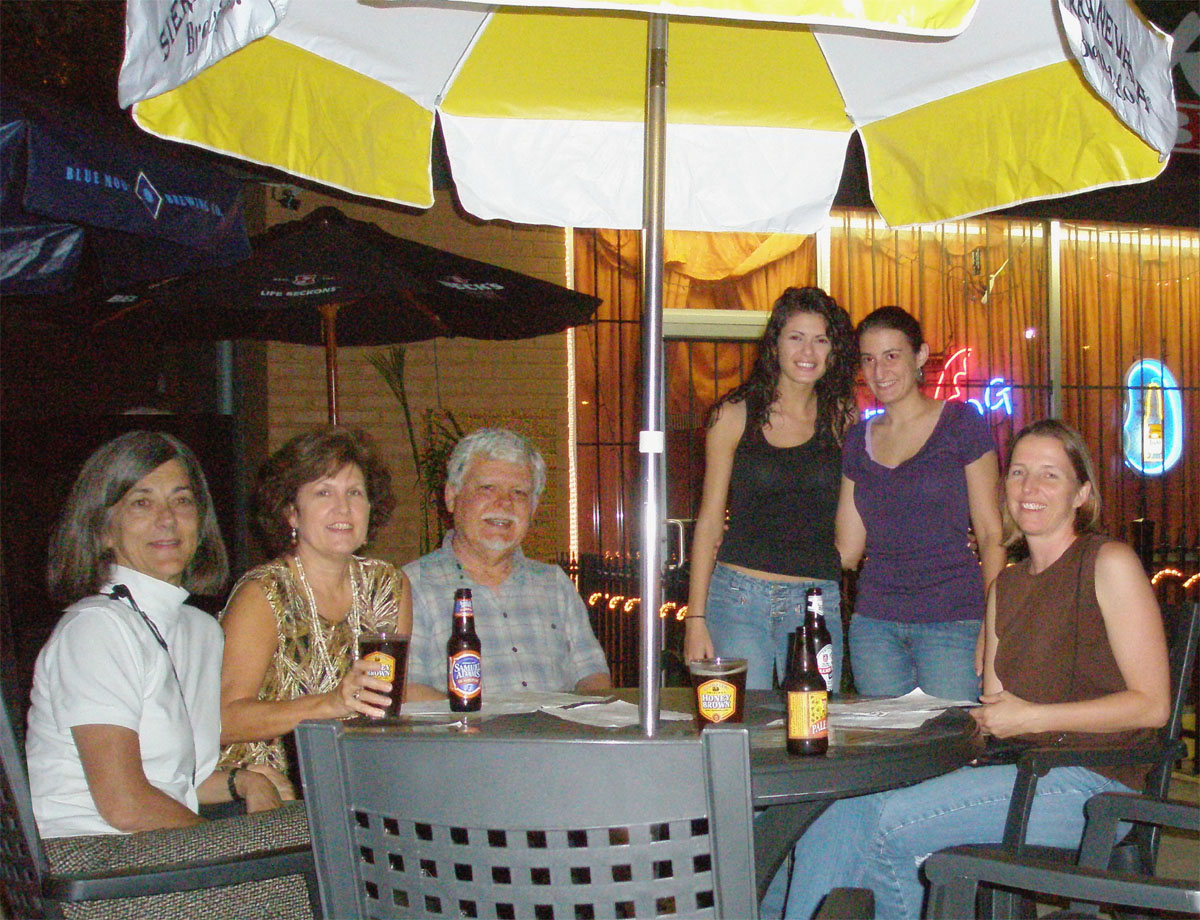
As a norm, we don’t do restaurant or bar reviews, but, after a recent meeting, several “Friends” went to Raffe’s Beer Garden (3358 Poplar; 454-9988) for a late dinner, and we want to spread the word. Raffe’s has great gyro sandwiches, more than 200 beers to choose between, an outdoor patio as well as a small indoor dining area, plus bellydancing some Saturdays, so check it out. We think you’ll like it. And while you're there, maybe you can persuade owner Raffe Sakan to consider a vendor’s license, setting up some temporary tables or using those at the Visitors Center, and serving her fare down along the riverfront in good weather.

[Click here to read more...]

GGM goes National


– a report from FfOR Board member Don Richardson

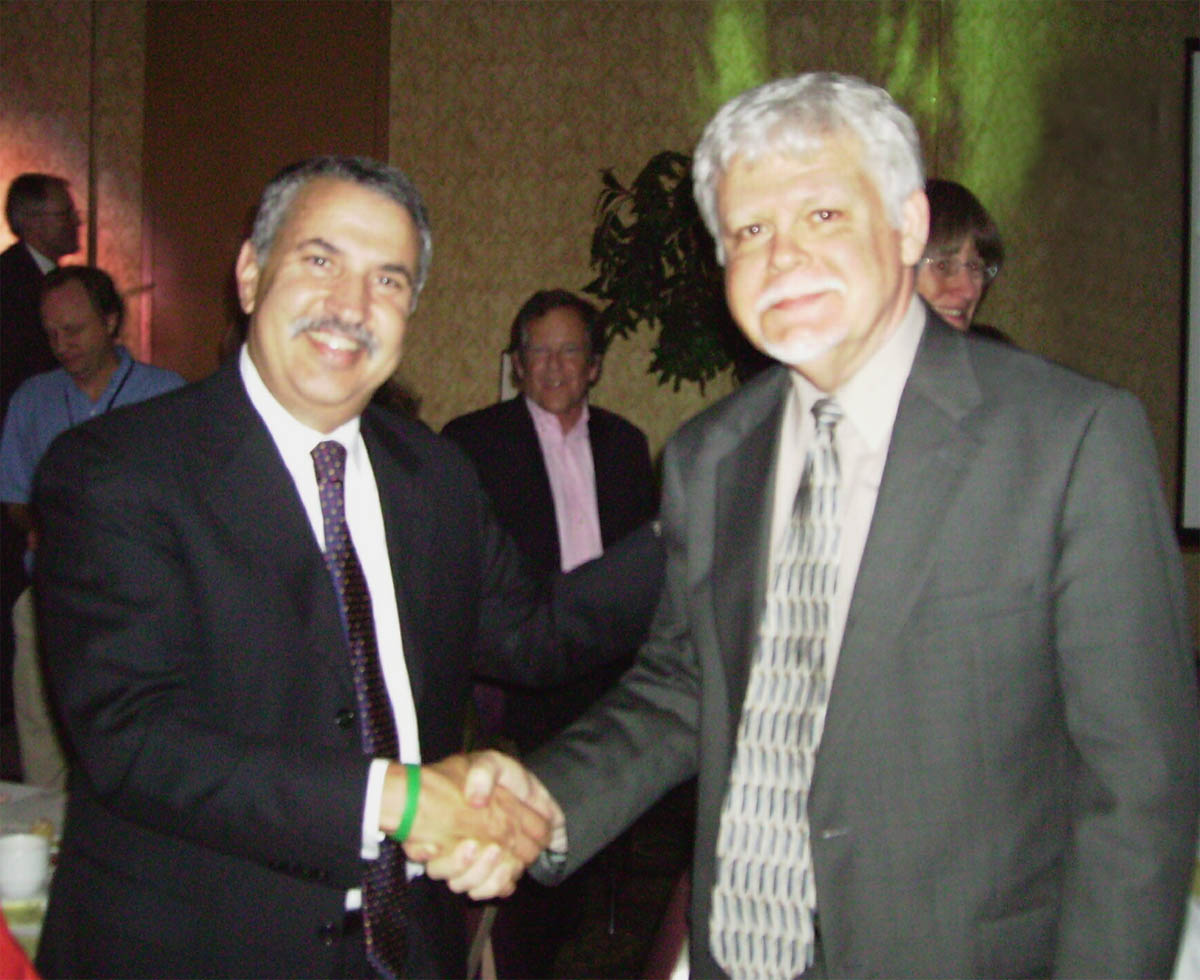
Thanks to Shelby Farms Park Alliance, Don Richardson had a green wristband with him in San Francisco to present to New York Times columnist Thomas Friedman on behalf of our collective Greening Greater Memphis movement.

Freidman writes extensively about environmental issues and was at the recent Sierra Club meeting in San Francisco to receive the 2007 David R. Brower Award, which "recognizes a professional journalist whose work has made a significant difference in the actions of government at the local, state or national level pertaining to the environment."

Immediately after the banquet, Don had a chance to tell Friedman that in Memphis we have updated his famous phrase, "Green is the new red, white and blue" to reflect our grassroots outreach and to "award" Freidman a wristband for making being green very hip.

Friedman was ecstatic in his appreciation, creating a minor stir by jumping up and saying, "I love it, I can't wait to put it on." Jeremy Doochin of Nashville, captured the moment for all of us to enjoy.

National Sierra Club Executive Director Carl Pope is seen in the middle background stepping off the podium wondering about all the excitement.

Don also gave wristbands to National Sierra Club President Robbie Cox and several leaders from Tennessee’s surrounding states, so as Don says, “I guess this means we should now be perceived as a regional, if not a national, movement.”

[Click here to read more...]