Fast forward after Thanksgiving to Celebrate Christmas Downtown


Light displays, the Downtown Holiday Parade, and the “Jolly” Trolley on South Main are good reasons to go downtown the day after Thanksgiving.

And the 2009 Memphis Heritage calendar is a great stocking stuffer for Memphis lovers.

The Memphis Holiday Parade
Friday, November 28, starts at 5pm
South Main Historic Arts District
Bands, performers, local celebrities, and dancers marching north on Main Street from St. Paul to Huling.

Before the parade, there’ll be family activities in the shops and galleries along South Main – everything from face painting to magic shows - as part of the FM100 and WRVR 104.5 /The River Make-A-Wish fundraiser.

And after the parade, there’s the South Main “Jolly” Trolley Night, December's on-the-street festival, with music, entertainment, and egg-nog in the shops and galleries.


The 2009 Memphis Heritage calendar focuses on our historic downtown. Photographs by Don Newman have been selected by Bank Tennessee and Finard Properties to celebrate the opening of a Bank Tennessee branch at the corner of Court and Second in what was originally the 1907 Commercial Appeal Building. The building was converted to house Welcome Wagon in 1923. For more information about Memphis Heritage’s calendar party and how to buy a copy of the calendar, click here or phone 901.272.2727.

[Click here to read more...]

Cossitt Courtyard listed as 1 of 5 underused outdoor spaces in Memphis


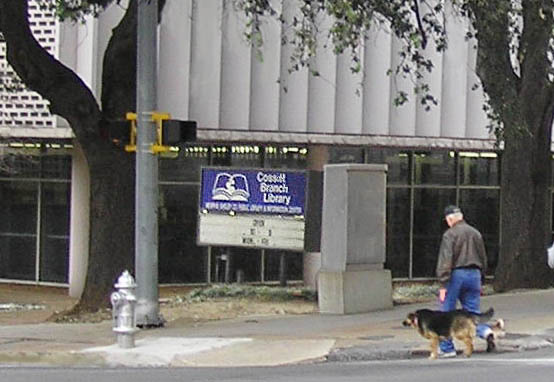
The Gates of Memphis blog has taken a look at underused outdoor spaces in Memphis – “5 areas that could be social anchors in our city’s new street life.” One of those is the Cossitt Library’s Front Street courtyard. The blog says the challenge is to do something "small, simple, and public" on this valuable site.
Click here to read the blog.
Click here to read the Project for Public Spaces comments on the site. (Specific suggestions for the courtyard are on p. 19.)

[Click here to read more...]

Swimming Upstream

The Commercial Appeal on November 9th reported front-page news that impacts our riverfront and our city in general. While the Mayor and City Council are deliberating budgetary constraints, the Corps of Engineers and the Lower Mississippi River Conservation Committee are moving forward to restore river flow behind the dikes on Loosahatchie Bar and Redmond Chute.:

Herenton, Council study options for cutbacks, including buyouts
By Amos Maki, Memphis Commercial Appeal
Sunday, November 9, 2008

As the effects of the global meltdown trickle down to City Hall, Memphis officials are considering employee buyouts and other measures to deal with what could be the city's worst financial year in nearly two decades.

Mayor Willie Herenton and the City Council gathered Saturday at the FedEx Institute of Technology at the University of Memphis for their annual retreat. While the banter was lighthearted at times, the financial scenario laid out by city officials was anything but.

Herenton said next year probably will be the toughest of his 17-year tenure, with a host of cost-drivers -- fuel, utilities and contributions to health and retirement benefits -- continuing to escalate, while sales tax and property revenues are likely to decline.

Herenton promised no property tax increases next year and delivered a broad cost-control plan to council members, who have the ultimate control over the city's purse strings.

The tentative plan includes offering buyouts and severance packages to city workers to reduce personnel costs, cutting capital expenditures, looking for opportunities for city-county consolidation and retooling heath care and pension benefits.

Herenton did not say how many employees would be offered buy-outs and promised to provide details to the council in the next 30 days.

"There will be no property tax increase to support our budget in 2010," said Herenton. "We have developed a buyout plan in an effort to reduce personnel costs."

Herenton said the city is prepared to restructure its health care, retirement and benefits plans.

"In the corporate arena, the employees are paying more and the employer is paying less," said the fifth-term mayor.

"These are trend lines at the corporate level and governments are now looking at the same kinds of trends," said Herenton. "It is predictable that in the future the benefit programs provided to employees will change."

City officials said they likely will start the 2010 fiscal year, which begins in July, facing a $25 million deficit because of increased costs.

The city probably will have to scale back its capital budget, the five-year plan that funds major projects like road improvements and costs $90 million to $100 million annually. City finance director Roland McElrath said the capital budget will likely be $70 million next year.

McElrath also said sales-tax revenue, state revenue sources and property-tax revenues are all likely to decline next year. Sales taxes, which generate about 20 percent of the city's revenue, are likely to get hit hardest.

"We think this trend will continue downward, and unless we see a quick turn around in the economy there will be a sharp drop-off in 2010," said McElrath.

The city has around $89 million in reserves, the roughly 10 percent of the city's general budget that the credit rating agencies like. That number includes a likely $16 million surplus this year.

Looking ahead to next year, council members and the mayor said major cuts to government spending are likely, possibly even in fire and police services, whose budgets represent more than 50 percent of the city's spending.

"We are in these times going to have to prioritize needs," said Councilman Shea Flinn. "It could get very ugly, very quickly."


Project aims to restore Miss. river flow and aquatic life behind diversion dikes
By Tom Charlier, Memphis Commercial Appeal
Originally published 12:00 a.m., November 9, 2008
Updated 09:59 p.m., November 8, 2008

With its Sahara-like dunes and outcroppings of sun-bleached shells that hinted at a richer past, the acreage stretching out behind Ron Nassar and John Rumancik on a crisp fall morning had all the hallmarks of an ecological desert.

This area just upstream from Downtown Memphis used to be a back channel of the Mississippi River -- a place where young fish could find refuge before plunging into the swift current, and where migrating shore birds could swoop in for a quick meal of tiny crustaceans.

Biologist Leighann Gipson surveys the scene near a Mississippi River dike targeted for relief to restore aquatic habitat up and down the river.

The Corps of Engineers and the Lower Mississippi River Conservation Committee are putting notches in navigation dikes on Loosahatchie Bar and Redmond Chute near Memphis to restore river flow behind the dikes.

But today, it's 11 miles of mostly sand.

"You can see what's happening to the river," said Nassar, coordinator of the Lower Mississippi River Conservation Committee. "You're converting it from aquatic to terrestrial habitat."

The problem lies with the navigation dikes -- stone walls up to a mile long -- erected by the Corps of Engineers to divert the Mississippi's water away from back channels and into the main river where barges navigate. Although they've kept the navigation channel deep enough for barges, the dikes have dried up many of the critical side chutes and channels behind islands.

But now, through a comprehensive program known as

"Restoring America's Greatest River," the corps and a group of other federal and state agencies are working to undo the damage. They've identified 239 projects along 954 miles of the river between Cairo, Ill., and the Gulf of Mexico to improve aquatic habitat and recreational opportunities.

Two years ago, in the initial project of the restoration campaign, the group reopened a secondary channel behind Island 63 in Coahoma County, Miss.

In a $200,000 project now under way, a contractor is creating large notches in seven dikes that blocked channels behind Loosahatchie Bar and nearby islands near the Arkansas side of the river across from DeWitt Spain Airport in Memphis. To make the notches, trackhoes and bulldozers peel away rocks weighing up to 5,000 pounds.

Until now, water flowed into the secondary channels only when the river was high. When low stages occur during summer, water gets trapped behind the dikes and eventually dries up or withers into stagnant pools, in which fish are doomed.

Biologists over the years have noted a decline in the diversity in the age groups and sizes of some fish found in the river. It's been attributed in part to the loss of the secondary channels, which newly spawned fish need to safely forage and grow before entering the main river.

Once the notches are in place, the river will scour away some of the sand, creating channels that will have some flow at least 97 percent of the time.

Rumancik, a biologist for the corps, said the builders of the dikes in past decades shouldn't be faulted for not foreseeing the damage.

"Nobody ever thought what might be the impacts because the river was so big and huge," he said.

[Click here to read more...]

22nd Outdoors Inc. Cyclocross Championships on the Riverfront


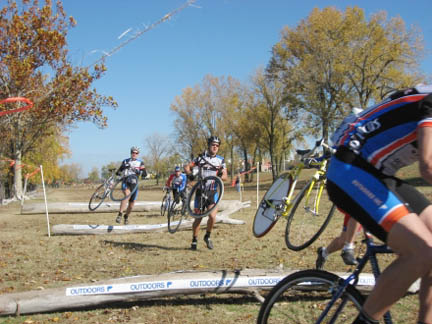
Once again, Outdoors Inc. gets the credit for bring an exciting outdoor sport to the riverfront. For those of you not yet in the know - Cyclocross is a form of bicycle racing. Riders make multiple laps on a short 1.5 – 2 mile course where part of the challenge is varying surfaces - pavement, wooded trails, grass, steep hills – and part is dismounting and carrying bikes over obstacles.

Sounds like fun to watch, and we’ll have a chance at the 22nd Outdoors Inc. Cyclocross Championship Race, Sun. (11/16) in Green Belt Park on Mud Island. There are races for two skill levels; the experts will start at 10 am. For more information, click here.

[Click here to read more...]

Riverfront Songmeister has hit new book


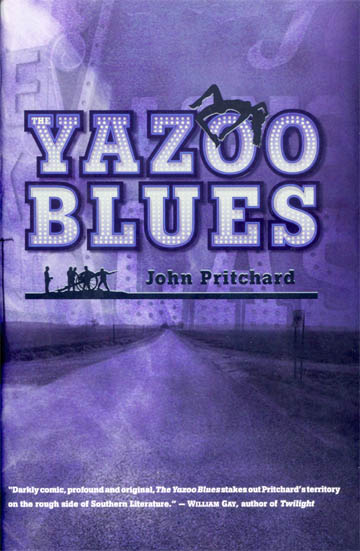
Critics have called Yazoo Blues “profound,” “profane,” “hilarious”. Add to that perceptive and a great read. It’s hit book # 2 for Memphian John Pritchard who will read from the book and sign copies Thursday (11/13), from 5:30 – 7 pm at Burke’s Bookstore (936 S. Cooper).

Pritchard is also well-known for his song-writing skills and is one of the artists who donated his talent to help rescue the Memphis riverfront. Pritchard wrote the lyrics to “Save Our View”, the 1st song on the CD Save our Riverfront. To find out more about the CD and how to order a copy, click here.

[Click here to read more...]

Veterans Day Parade

FfOR salutes our many U.S. Military Veterans in Memphis and Shelby County. We are deeply grateful for your dedicated service in the defense of our nation.

The 20th annual Veterans Day Parade in Downtown Memphis will begin at 10 a.m. Tues. Nov. 11 at Exchange and Second and move down Second to Monroe. The parade will feature veterans, current military personnel, school bands, and ROTC units. It is sponsored by American Legion Post 1.

On an historical note:

Memphis 1941 —
"In the last light of evening on Sunday, 7 December 1941, a careful observer could have noticed a small but significant change in Memphis. At the Tennessee end of the Harahan Bridge, Memphis' only road link over the Mississippi River, four Memphis policemen stood guard. Armed with shotguns, the policemen patrolled the bridge from the Tennessee state line to the Memphis entrance while four searchlights illuminated the bridge pilings and traffic lanes. Across the river, Arkansas State Highway Police ensured the security of the western end of the bridge. Monday morning's edition of The Commercial Appeal carried Police Commissioner "Holy" Joe Boyle's announcement that the police stood ready to meet any emergency with "20 machine guns, of which 16 are new, 20 pump [shot]guns, four high-powered rifles, tear gas guns and ammunition."(1) The United States was at war, and Memphis was ready."
-- From World War II and Memphis, TN Click here to read more.


A famous Memphian in uniform and the crew of the Memphis Belle photographed in England in 1943.


[Click here to read more...]

Support the Cotton Museum

Cotton was once king in the Mid-South, and the Cotton Exchange at Front & Union was the center of activity. Today cotton trading has moved away from Cotton Row, and the Exchange's trading floor has become the Cotton Museum, a fantastic source of information about the cultural, economic, and historical role cotton played in Memphis and throughout the region.
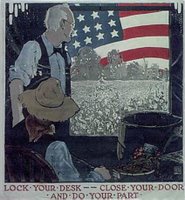
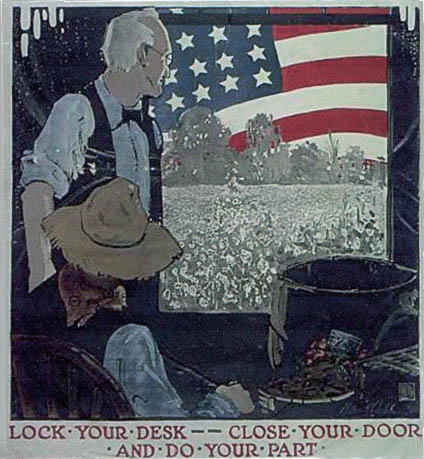
Nov. 15th the Museum will hold its 2nd Annual Harvest Festival & Silent Auction at Earnestine & Hazel's (531 S. Main). There'll be music, food, and drink, and, of course, all proceeds go to support the the Musuem. So as the invitation says, "Lock your desk -- Close your door -- and do your part." For information and to purchase tickets, phone the Cotton Museum at 901-531-7826.


[Click here to read more...]

Cossitt Fall Book Sale


Support our downtown library and pick-up some good books for the winter at the Cossitt Fall Book Sale. You might even find a treasure. The Cossitt Fall Book Sale will be Wednesday, Thursday, and Friday (Nov. 12 - 14) between 10 am and 4 pm in the library's meeting room.

[Click here to read more...]

Chance to See Salton Sea

There's an amazing/horrifying/almost unbelieveable place -- California's Salton Sea and a film by Chris Metzler -- Plagues and Pleasures on the Salton Sea, that tells its story.


Thanks to the Sierra Club and Power House Memphis, we can see the full film Wednesday, Nov. 12, at 7:30 pm at Studio on the Square. Admission is free (with donations accepted).

The film is part history and part cautionary tale of this place once known as the "California Riviera". Created by an engineering error in 1905, reworked in the 1950s as a world class vacation destination for the rich and famous, suddenly abandoned after a series of hurricanes, floods, and fish die-offs, and finally almost saved by Congressman Sonny Bono, the Salton Sea is now a fetid, stagnant, salty lake with an undetermined future.

For more information about the showing at Studio on the Square, contact Tom Lawrence at bus@thecave.com or (901) 237-4819.

[Click here to read more...]

2008 Environmental Justice Conference


This Sat. (11/8) is the 7th annual grassroots environmental conference sponsored by the Sierra Club -- an opportunity to hear keynote speaker Charles Allen III, attend workshops, and learn more about about topics that affect our health, safety and general environment.

Sponsored by the Sierra Club, this year's Environmental Justice Conference, "Surviving & Thriving Now & Into the Future" will be held Saturday, November 8, from 9:00 a.m. to 3:00 p.m. at The Church of The River (292 W. Virginia Ave.). Sign-up now to attend.


This year's keynote speaker is Charles Allen, III of New Orleans' Lower 9th Ward, Tulane/Xavier Center for Bioenvironmental Research, and the Urban EcoInitiative. The target audience includes community leaders, environmental activists, ministers and religious leaders, educators, elected officials, parents, college students, and community advocates of all kinds.

The conference is free, but requires pre-registration. Lunch is provided for conference participants. Please call Rita Harris at (901) 324-7757 or e-mail rita.harris@sierraclub.org for a conference brochure and/or to register.

[Click here to read more...]

Traveler & NYT cover Memphis Waterfront

Outdoors Inc. and Joe Royer get much of the praise as Northwest Airlines Traveler calls the Memphis waterfront a hotspot for outdoor enthusiasts. And in The New York Times, Dan Barry focuses on the sad state of the Pyramid.


Old Man River - Spotlight on Memphis
NWA World Traveler

Memphis was built around the Mississippi River, and the lure of "Big Muddy," as the swirling brown river is affectionately called, is still the source of much of the city's vitality. The river's surrounding parks are the site of Memphis' largest celebrations, from the annual Beale Street Music Festival, Memphis in May's World Championship Barbecue Cooking Contest, the Fourth of July Fireworks Extravaganza and more.

The river is also a hotspot for budding and expert watersport enthusiasts. The first stop for anyone looking to enjoy watersports in Memphis should be Outdoors, Inc. Co-owner Joe Royer is the city's undisputed canoe and kayaking expert, and Outdoors, Inc. not only offers equipment rentals and lessons, but also takes individuals or groups on daytrips of varying lengths and difficulty levels.

The banks of the river provide as much athletic entertainment as the water itself. Two bridges, the Hernando de Soto and the Memphis Arkansas Memorial Bridge, connect Memphis to Arkansas, while joggers, bikers and rollerbladers enjoy the paved walkways from the south end of Downtown to the Wolf River Harbor. To learn more about Big Muddy's history, visit Mud Island River Park (mudisland.com), accessible from Downtown either by tram or walking bridge. -M.H.R.


A City’s Horizon, Reshaped by an Empty Promise
By DAN BARRY, columnist for the NY Times, “This Land”
October 27, 2008

In a city whose name conjures young Elvis but evokes ancient Egypt, an expedition set out with a road map and some trail mix to find the world’s sixth-largest pyramid, said to have been all but abandoned by the civilization that built it. Legend or fact?

With only bottled water and a rental car’s coolness to ward against temperatures in the oppressive low 70s, the team soon despaired. It found houses and churches and rib joints, but no polyhedral structures of note. Then, just when membership in the Explorers Club was about to be risked for some pulled pork and coleslaw, the team noticed a shimmering, triangle-shaped mirage on the western horizon that grew larger upon approach.

Holy Moses! The Great American Pyramid of Memphis.

A glorious structure of poured concrete and shiny stainless steel, of form if not function, it rose 321 feet from the sedimentary banks of the Mississippi River, just an ibis’s glide from Interstate 40 and the Hernando de Soto Bridge. Nothing quite like this existed anywhere else on the continent, save the exotic metropolis of Vegas.

Forgetting all recent privations and postponing all plans for barbecue, the expedition drove past the empty, glass-encased guard booths; odd, that. It also had no difficulty finding a parking space in an otherwise empty lot. Hmmm.

Suddenly realizing the import of its discovery, the most colorful imprecations escaped the team’s collective lips. The Great American Pyramid was empty! Hollow! A pointy-headed tomb without occupant!

The legend was true, then; the legend passed on in scores of news accounts over two decades, and now stored in electronic databases for which access requires that a secret password — “Help, please!” — be whispered to a research librarian. The deciphered story is this:

A quarter-century ago, the idea of a pyramid arose from the city’s desire to provide a larger venue for sporting events and concerts, and to have a structure as defining as the Gateway Arch in St. Louis, 300 miles upriver. Along came Sidney Shlenker, a Denver businessman and visionary, to promote a pyramid of pyramids, one befitting a city named after the ancient Egyptian capital.

Mr. Shlenker’s pyramid would be a many-leveled place, with an arena for the Memphis State basketball team, space for glitzy concerts and monster trucks, a Hard Rock Cafe, a hall of fame for music, or college football, or something — and an inclinator leading to an observation deck at the pyramid’s apex, where paying customers could experience that sense of owning as far as one can see.

“It’s going to be a monument like the Statue of Liberty or the Eiffel Tower, a signature for the city,” Mr. Shlenker said at the time. “The difference is this will have something to do inside it.”

But Memphis has reason for its blues. By the time the $68 million arena opened in November 1991, the city and Shelby County had fired Mr. Shlenker for failing to come up with his share of the project’s cost. The Great American Pyramid of Memphis became, simply, the Pyramid: a place with 150,000 square feet of unused space and a never-assembled inclinator somewhere in its cavernous hold.

The Pyramid opened with a farewell concert by The Judds and some flooding in the restrooms. Having altered the Memphis horizon, the jaw-dropping edifice filled everyone with emotion — half with pride, half with anger.

“It’s quite a striking feature on the skyline,” says Ed Frank, the president of the West Tennessee Historical Society. “But as a citizen and as a taxpayer, it was a waste of money to build the Pyramid on low ground there. I have gone to events there, and I can say I’m not that impressed by the feeling inside.”

But Kevin Kane, the president of the Memphis Convention and Visitors Bureau, says the charm of the Pyramid depends on where you stand. Yes, it is a monument to failed dreams. But it also helped to energize downtown Memphis, he says. “From my view, the Pyramid more than paid for itself many times over.”

Oh, those days. The World Wrestling Federation’s “St. Valentine’s Day Massacre.” The “Bloody on the Muddy” fight between Lennox Lewis and Mike Tyson. Ballerinas and rock stars and Disney on Ice.

Within the decade, though, the Pyramid was passé. The Vancouver Grizzlies of the NBA agreed to move to Memphis if the community built it an arena. The team played in the Pyramid for three years, biding its time, until September 2004, when it moved to the new FedEx Forum, a four-minute drive away.

You don’t need a burning bush to know what happened next. The Memphis State Tigers and just about everyone else abandoned the Pyramid for the new arena. Not long after, the city created a reuse committee to grapple with one question: What do you do with a 321-foot-high empty pyramid?

“We put a package together and sent it to everyone from Six Flags to Disney to people in between to see if there was interest in re-utilizing the facility,” recalls Mr. Kane, who was on the committee.

After considering various uses, from an aquarium to a church, the committee finally endorsed a proposal that the Pyramid become — a giant Bass Pro Shop, retail Mecca for all who hunt and fish. A news release in February 2006 announced the company’s plans for a restaurant, a hotel, and perhaps the use of the scoreboard to show outdoor videos.

So it was written...

Nearly three years later, city and county officials still have not agreed on the redevelopment deal — stymied, perhaps, by the image of a open-mouthed bass appearing over the entrance to the Pyramid. Last week the county commission rejected the Bass Pro Shop plan, but the debate continues, with one city councilman calling the proposal “the only date to the dance.”

This was only part of the story, the part told by documents that would be dusty were they not virtual. The rest of the story was here “in the field,” as expedition-type people like to say, amid the long shadows of the great but empty Pyramid.

The archeological site was ghostly quiet, if one did not heed the buzz of traffic and the ding-ding of a passing trolley. And while there was no trace of the last concert held here — Bob Seger & The Silver Bullet Band, Feb. 3, 2007 — the denizens of this sacred place spoke from the past through the telltale artifacts left behind.

Markings on a pillar provided directions to no one for Gate 3. Signs called out about coat checks and restrooms from the dark side of a cobweb-covered glass door. Dangling wires and missing metal railings reflected visits by those who traffic in stolen antiquities. The scoundrels!

Just as the team was about to give in to hunger, it made the expedition’s most remarkable discovery: a large statue of an Egyptian pharaoh. It seemed to represent Ramesses the Great, judging by a plaque at its base that said, “Ramesses the Great.”

Seeing the pharaoh, standing sentry before an empty pyramid, summoned to mind a poem by Shelley. How did it go?

‘My name is Ozymandias, King of Kings:

Look on my works, ye mighty, and despair!’

That is all the team could remember. Exhausted from the thrill of its exciting find, the team got into its rental car, drove across the lone and level asphalt stretching far away, and went in search of some barbecue.

[Click here to read more...]