
Harbor Pollution Mystery Partially Solved

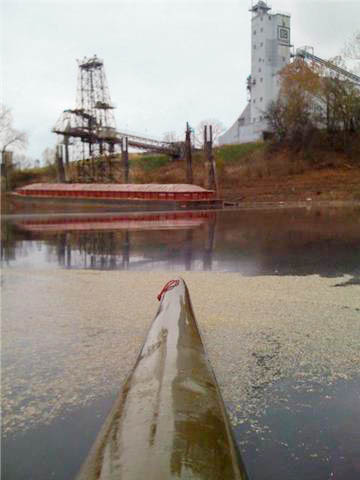
Trying to figure out why water in the harbor was black, smelly, and covered with a grain-like substance, the Memphis Sewer Dept., the Memphis Storm Water office, and the Division of Water Pollution Control all took a look.

The results:
* Raw sewage was ruled out as the cause of the "smelly, black water."
* Bunge Corp. was issued a Notice of Violation for blowing grain "dust" off barges into the water and told to modify the process to prevent the problem in the future.

Here's a letter from Terry Templeton at the Division of Water Pollution to paddler Elmore Holmes that gives more detailed information.

Mr. Holmes,

On November 6 the Memphis Sewer Department received a complaint about the same situation you emailed me about on 12/3/08. The sewer personnel collected a fecal coliform sample on 11/7. The result of 110 col/100 ml seemed to rule out raw sewage as a cause of the dark water in the Wolf River Lagoon. The Memphis Storm Water office inspected the area again on 12/3/08 and did not find a source of the dark water. Field readings of the water indicated a pH of 7, which is normal, and a dissolved oxygen of 3.97 mg/l, which is low.

After we received your email we contacted the city Storm Water program who informed us that they and the sewer department had already been to the area. Because the Wolf River Lagoon has no outlet on the north end, we believe decomposition of organic material in the water, together with stagnant and slack water conditions, contributed to the dark water.

Personnel from my office inspected the nearby Cargill and Bunge facilities on 12/11/08. The dark water appeared to be significantly improved at that time. Bunge Corp. was found to be using an unacceptable practice that allowed grain "dust" that accumulates on the barges to be blown into the water. On 12/18/08 we issued a Notice of Violation to Bunge requiring that they modify their practice and prevent material from being blown into the water.

Thank you again for contacting us.

Terry

[Click here to read more...]

New Year's Resolutions - a few suggestions

2009 is almost here, and we'd like to suggest a few alternatives to the standard new year's resolutions. They are inexpensive, green, and good for Memphis.
Here are 5 to consider:

1. Volunteer in the community -- help clean up the harbor, support the Cossitt, read to inner city children, work on a project through your church, .... Click here to become a volunteer with Friends for Our Riverfront.

2. Make a commitment to recycle and use earth-friendly bags for grocery shopping.

3. Attend at least one City Council and one County Commission meeting, and take a friend.

4. Walk or jog the Bluffwalk instead of joining a gym - it's free and still good for your heart.

5. Shop at downtown's Farmer's Market, hear the symphony at the Cannon Center, take in a play at the Orpheum, and be sure to attend at least one South Main Trolley Night.

[Click here to read more...]

Beale Street Landing - a white elephant already ? !


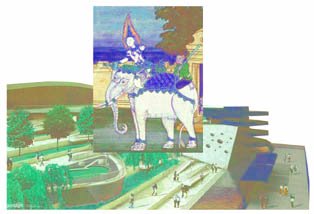
If you drive along Riverside Drive, you’ll see that work has started on Beale Street Lanindg (BSL). But the project is far from finished, and much more tax money is slated to be spent in the future. Meanwhile, Majestic America Line, the company that wanted to use the new boat dock, is in financial trouble, trying to sell their boats, and plans no trips for 2009 or any time in the future.

Looks like BSL could already be a white elephant.

Here's the Flyer article that broke the story and other information on the $29.4M public project.
Click here to read the Flyer article.
Click here to read Majestic America’s announcement.

Links for more information on BSL. Click to see
Overview of project - What, Where, Why, Who? Do we need it? Can we afford it?
Council votes to approve new boat dock
What it will look like and where it will be
An Update on BSL – the details
The 2008 Memphis Capital Improvement Project budget shows the total public cost of Beale Street Landing as $29,421,026 with $7,457,026 of that to come from federal grants. Included in the federal funding is $1M in 2004 Transportation funds under the Surface Transportation Program, $1,280,000 in a 2005 transportation appropriation under Ferry Boat Discretionary Program Awards, and $1,969,393 in a second transportation appropriation under Ferry Boat Discretionary Program Awards.
Could this be the real reason for the landing?

Labels:


[Click here to read more...]

New Harbor Pollution a Mystery


The Memphis harbor is a tremendous asset for our city, but paddlers have reported new harbor pollution -- "black water, grain-like substance, smelly." The Flyer reported it. The question: What is it? What’s the cause? Here’s the article.

What's That Smell?
River and harbor users would like to know
.

By John Branston

The strange, smelly substance that darkened the Wolf River Harbor recently was apparently not an oil slick.

The unpleasant change in the harbor north of downtown was noticed by kayaker Elmore Holmes and others who use the waterway and the Mississippi River for recreation.
"Whatever happened happened a while before I noticed it," Holmes said. "Basically, the water is just black at the north end of the harbor."

He said it looked like an oil slick but smelled more like raw sewage. Last weekend, Holmes noticed a "bathtub ring" along the shoreline after the water level dropped. It appeared to contain a grain-like material.

"I then remembered a boater friend telling me a month or so ago that he saw workers at the Bunge plant dumping large quantities of a grain-like substance in the harbor," Holmes wrote in an e-mail to city officials and river users.

"I'm not sure how such a thing would turn the water black, but too much of anything can be harmful to a body of water," said Holmes, a woodworker who frequently uses the river for kayaking and canoeing.

Bunge Corp., located on North Second Street, is one of the commercial users of the harbor that is shared by barges and pleasure boats launched from Mud Island. The residential area of Mud Island backs up to the harbor, which has been littered with trash from storm sewer runoff. At low water, trash, odors, and pollutants are especially apparent.

Terry Templeton, manager of the Tennessee Department of Environment and Conservation, told Holmes that the substance probably was not oil, but the state and city are still investigating.

James H. Baker, project director for the Tennessee Water Sentinels and a kayaker and member of the Sierra Club, said the black water may indeed be related to grain elevators and the loading of grain onto barges.

The following are excerpts from his letter to Holmes and Templeton and local media:
"If the grain-like material (most likely soybean dust, as that is what is being harvested now) gets into water, it will decompose," Baker wrote. "The products of that decomposition will have a smell similar to raw sewage, and in enough quantity, the decomposition products will discolor water."

"I sincerely hope that grain elevator operators are not deliberately pushing the excess grain that settles on the decks of the barges overboard into Wolf River Harbor. As the author of the first City of Memphis storm water ordinance, I'd say that would be a clear violation. Deliberately pushing excess grain into the harbor would also violate any of these grain elevators' storm water permits that are issued by the Tennessee Department of Environment and Conservation."

"On the other hand, there are a number of sanitary sewers in the area that may need to be checked to see if they are not leaking into Wolf River Harbor."

"Perhaps the environmental regulators should take some water and sediment samples in the vicinity of the grain elevators' loading platforms and test them. ... They should also consider testing the water column for dissolved oxygen and, just to make sure that raw sewage isn't involved, sample and test for E. coli as well."

"Like you, I'm endlessly fascinated by the Mississippi River's geography, geology and culture and the recreational and economic opportunities it affords to Memphis. A dirty riverfront will negatively impact Memphis' economy and its citizens."

[Click here to read more...]

Voters Across the Country Support Land Conservation

Despite the nation's fiscal woes, Americans demonstrated on Nov. 4th that they will dig into their pockets to create parks and conserve open space. "Whether Democrat or Republican, voters seem to be of similar minds on one issue: conservation," said Will Rogers, president of The Trust for Public Land.

At the polls, voters approved funding for 62 of 87 conservation measures, generating a single-day record of $7.3 billion in new conservation funding. These results capped a record-breaking year, in which voters said "yes" to measures totaling nearly $8.4 billion in new public funding for land conservation. According to Rogers, "the results from 2008 continue a strong trend: people want to preserve land in their communities, and they are willing to pay for it."

"Voters understand the need to invest to preserve our land and water resources for future generations and that's just what these ballot measures will provide funding to do," said Ernest Cook, director of conservation finance with The Trust for Public Land.

One of the the measures approved was Minnesota's $5.5 billion Clean Water, Land and Legacy constitutional amendment -- the nation's largest ever state or local conservation funding measure.

Among the other significant conservation initiatives approved were:
* East Bay Regional Park District, California: a $500 million bond measure received 71 percent support
* Hillsborough County, Florida: a $200 million bond measure received 79 percent support
* Hunterdon County, New Jersey: An extension of the county's 3-cent property tax for 20 years will generate $152 million
* Community Preservation Act, Massachusetts: 7 of 8 measures approved, bringing the total of communities statewide that have adopted CPA to 140
* Blaine County, Idaho: a two-year property tax for open space will establish the first county conservation program in the state
* Johnson County, Iowa: a $20 million bond will establish Iowa's first county conservation program

The Trust for Public Land, and its lobbying affiliate the Conservation Campaign, played an integral role in the success story.
Click here to see a complete list of results from local and state balloting on conservation and parks.
Click here to access the Trust for Public Land homepage.

[Click here to read more...]

"Create Fun Signage"


When Memphians were looking at ways to enjoy and improve the riverfront, one of the top 10 suggestions was to create fun signage. "Create a riverfront-wide, site-sensitive, illustrative system of fun facts and information ... to inform and remind us, to educate and entertain our children, and to enlighten our city's visitors."

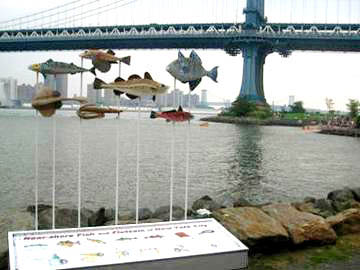
Here's a great example from Brooklyn Bridge Park of a fish sign that is both fun and educational.
Click here to read the other suggestions in the Project for Public Spaces workshop report. Page 6 gives more of your suggestions about signage.

[Click here to read more...]

A Jaunt to Tunica


Tunica has more than casinos to offer, and on Saturday, Dec. 6, there’s a trip there with the Sierra Club to
• hike the riverside forest on 1.9 mile roundtrip trail,
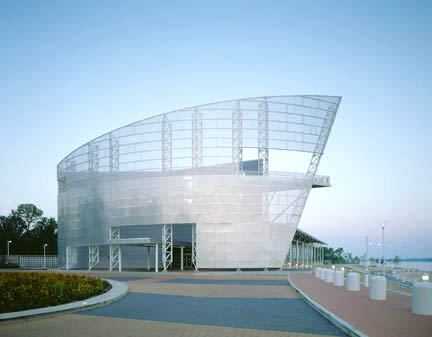
• visit the outstanding museum – a one-of-a kind interactive,interpretive center that showcases the life of the river and its history,
• watch the sunset, and
• stop in Hollywood on the way home for dinner in an old farm commissary.

Here are the details:
The Sierra Club Chickasaw Group has organized the trip, which will meet at the museum in Tunica at 2 pm.

To reach the Museum:

From the North: Highway 61 south to Casino Center. Turn right and drive 2.3 miles, then turn left on Casino Way. Turn right on Fitzgerald's Boulevard, then left on RiverPark Drive.

From the South: Highway 61 north to Hwy 304 (Casino Strip Drive). Turn left and drive 1.8 miles, then turn right on Fitzgerald's Boulevard, then left on RiverPark Drive.

For assistance with directions, please call the museum at 662-357-0050 or 866-517-4837 (866-51-RIVER).

Museum cost: $5, $4 for 65 and older, $4 for under 12. $4 for groups of 20 or more.

Optional dinner after the outing at the Hollywood CafÈ, an old farm commissary.

RIDE SHARING: In Midtown, arrive by 1:00 pm at the Center City Shopping Center sign, Avalon & Poplar Ave. (1625 Poplar Ave).

For more information contact Sue A. Williams at z4cmv@juno.com or (901) 274-0524.

[Click here to read more...]